Showing posts with label classics. Show all posts

May 15, 2020

Reading the Classics: The New York Trilogy by Paul Auster


The New York Trilogy by Paul Auster comprises three novels: City of Glass, Ghosts, and The Locked Room, published in 1985-1986. The novels are considered a masterpiece of postmodern literature, reason enough in itself to read them, I suppose, but I discovered the trilogy when a friend recommended it to me, saying that reading it felt like having your brain gently stroked. That's a pretty great recommendation!

Once I started writing this review, I found myself, not for the first time, wishing I had attended some English Lit classes. For example, what's the difference between modernism and postmodernism? A quick google search failed to yield a simple definition, but apparently modernist works are based between late 1800s and the Second World War, and postmodernism appeared on the scene after that. The University of Turku study guide places the cutoff at 1960, but apparently some definition lean towards 1980. Here's a helpful article at Owlcation.com.

 When I think of modernist works of literature, writers like Joyce, Kafka, and Proust come to mind. Postmodernists . . . well, I think of Italo Calvino and Kurt Vonnegut, and some of the more experimental science fiction of the time (John Brunner's Stand on Zanzibar, anyone?). Both movements aimed to create a new kind of novel. Modernists brought us unreliable narrators, stream-of-conciousness, and experimental structures. Postmodern novels seem to focus even more on playing with the novel form, metafiction, and an ironic point-of-view. Many postmodern works feel a bit empty to me, like intellectual exercises rather than an actual story meant to touch the reader on an emotional level. Sometimes they come across as pretentious and needlessly complicated, sometimes enjoyable in the way that I enjoy a solving a puzzle. For me, The New York Trilogy landed in the latter category.

Oh yeah, spoilers ahead :)

For me, City of Glass was the hardest of the novels to wrap my mind around. A bit about the plot:  pulp writer Daniel Quinn takes a case meant for Paul Auster the detective and begins investigating Peter Stillman the elder because Stillman's daughter-in-law suspects he is coming to kill his son Peter Stillman the younger, whom he kept isolated from the world as a child because of some crackpot theories about the Tower of Babel.

First you have to figure out the characters: there's Daniel Quinn, the detective story writer who answers a wrong number and begins investigating a case meant for Paul Auster, the detective who is also a writer. This Paul Auster isn't the author of the novel, though. And then there's the narrator who is telling the story, who is a friend of Paul Auster, the detective-writer and is telling the story because Auster gave him the red notebook Quinn left behind and had written the story in. Confused yet? Yup.

Paul Auster the detective and Daniel Quinn seem to be mirror characters in several ways:

Auster/ Quinn

Detective who is also a writer / pulp writer who takes on the role of detective
Happily married with a son/ Alone, son dead
In control of his life/ Life feels empty, suffering from writer's block

The further you read, the more you start to question whether Auster the detective is even real, or only a side of Quinn's personality. In the beginning of the book Quinn wishes he were more like the fictional detective he writes about, and very conveniently the opportunity for a Noble Quest presents itself. And speaking about quests, Daniel Quinn, who takes his quest to protect Peter Stillman the younger to an absurd level, is very similar to a certain Don Quixote, and they both share the initials D. Q.. Just to make sure the reader gets it, Auster the detective/writer is writing an article on the identity of the author of Cervantes' Don Quixote. According to him, there are several possible authors for Don Quixote, and there are several possible authors for City of Glass. (In case you missed the Quixote connection the first time, you should read that bit again. If you've been taking City of Glass Very Seriously, you might feel a bit offended.) There might have been a lot more nods to Don Quixote, since I read the book as a teen and passionately hated the title character,  I don't really recall it all that well. (Not about to read it again. Walden's been on my reading list for a while, though.)

What about the title, City of Glass? Glass is fragile, and there certainly are fragile people in the story. It's also transparent, maybe that has something to do with being watched or the reader watching the characters or Quinn watching Stillman? And there's glass as in looking glass. There's a lot of mirror characters here, Quinn/Auster and the two Stillman the elders at the train station, Quinn/Don Quixote.    I dunno. 

I did enjoy the whole playing-with-languge thing in the bit where Quinn reads about Stillman's theory and I found the plot interesting enough that I wanted to see where it was going, but on the whole I failed to connect with Quinn or the other characters enough that I could say I liked the book. I appreciate it for its twisty-turny puzzle of a plot and for making me think, but do I want to read it again or anything else by Auster? Not really. 

In Ghosts, we have another private eye named Blue investigating a man named Black on the behalf of a man named White and so on. Everybody's named after colours, and there's some (pseudo?)philosophical stuff about what colours are associated with. Turns out that Black and White are the same person, shocker. Once again the private eye becomes lost in another persons life. And there's that bit about how writing's a lonely job and how a writer doesn't have a life of his own or even really exist. That probably has something to do with the title.

I really liked the conversation that Blue had with Black about how real-life anecdotes are meaningful as metaphors because they're true. I have no idea if the events mentioned are indeed true (the one about Whitman's brain, for example), but they're fascinating and maybe even say something about how a writer's mind works. I collect weird little tales like that, and a lot of writers I've read about do too. Maybe it's about how people understand things through stories. Here, again, I'm unsure if Blue is actually a real person. In the end Black says that Blue was necessary and important to get this far and that he knows the story by heart even if he hasn't read it. Is Blue only a part of the whole Black/White organism, like a character in a story, doomed to be manipulated by the author?

The Locked Room was my favourite in the trilogy. Again, we have the narrator, a a journalist with literary aspirations, who unwittingly becomes a detective when his childhood friend Fanshawe disappears and bequeathes to him a closetful of unpublished manuscripts and his wife and son. Again, the narrator becomes lost in another man's life and almost loses himself and everything he values.

There's a neat scene at the beginning when the narrator recalls an episode who Fanshawe as a child gave a birthday present to another boy who didn't have one to bring to the party. A selfless act, right? Then we read on and we learn that Fanshawe is alive and abandoned his wife and son. The manuscripts he left become bestsellers and the narrator marries the wife and becomes the boy's father. Is this a selfless act by Fanshawe, where he gives everything to his friend, or an ultimately selfish act, because he abandons his family? The reason he gives is that he can't publish his works unless people think he's dead. Another apparently selfless act is when Fanshawe nurses his dying father in his last days. But then we see another side of Fanshawe, how he gathers experiences to write about (there's every bohemian writer cliché from moving to Paris to the apparently mandatory brothel visit). Are all his selfless acts more about experiencing things than about people?  

The Locked Room raises the question of whether a writer can ever have a normal life, or is he/she always alone because he must reject his family and friends to gain the experiences a writer needs to write? Again, in the end the reader begins to suspect whether the narrator and Fanshawe are really the same person, that person killing the writer part of himself enjoy his time with his family. I'm not certain how to interpret the title. Sure, there's a locked room at the end, but there isn't really a locked room mystery here. Oh, and Peter Stillman makes an appearance. Is he the same one from City of Glass? And Quinn is mentioned, but referred to as a detective. 

All the novels share a frame of the detective story, but they're not really detective stories. Most of the time the endings are open and nothing really gets resolved. It's more about playing with the idea of writing literary fiction in a pulp framework. On a thematic level, all of the novels have in common the idea of the loss of identity. The narrators appear unreliable, and the reader can't even be sure the characters exist, much less what happens to them.

Despite all of my (over)analysing, I don't feel that The New York Trilogy is a difficult book to read. Sure, you have to pay attention, but the prose is very functional and easy to read, no convoluted sentences or difficult metaphors. If you want to try Auster, the trilogy is surprisingly short, only about three hundred pages.

After reading the book I was curious about how much of it was autobiographical, so I looked up a few articles on Auster. Here's one on The Guardian website I found interesting, in case anyone wants to check it out : https://www.theguardian.com/books/2002/oct/26/fiction.fashion


Just a heads-up, seems that I can't reply to comments on the blog. I have no idea why. But feel free to leave a comment, anyway. 


Oct 21, 2019

Reading the Classics: If on a Winter's Night a Traveler by Italo Calvino


IfOnAWintersNight.jpg
Image from Wikipedia 


And now for something completely different! Italo Calvino's If on a Winter's Night a Traveler, published 1979, is just that, a gloriously, breathlessly bonkers book that makes you smile. You might groan at the term "postmodernist novel"and grumble when you hear that part of the book is written in second person and the novel has an experimental structure, but don't let that put you off; this is a page-turner.

The novel starts in second person, telling you the Reader to put your feet up and start reading. Just when you get comfortable, the book changes on you. Turns out that there's been a mistake at the printer's, and after the opening chapter of Winter's Night, the novel continues as something completely different. And so it goes, over and over, the chapters of book openings alternating with the frame story of the Reader meeting Ludmilla (the Female Reader, I read this in Finnish so I'm not sure how the English translators handled this, Other Reader?). They try to get to the bottom of the mystery, and most importantly, keep reading.

This is the first 2nd person narrative that I've actually enjoyed, but I did get jolted out of the book a few times because the second person narrative assumes that the reader is male. The female Reader is addressed in second person in a short segment, but I didn't really relate to her, either. So there is bit of that indignant "no, I'm not" feel that you get in second person narratives, but it didn't keep me from enjoying the novel. 

The opening chapters that make up half the book are fun in their own right: each one is written in a different style in a different genre, some done better than others. Many of them are so engaging that I actually felt the Reader's frustration. And I love the last Easter Egg revelation of what happens when you read all the chapter titles in one go. 

This is very much a book about reading and writing, and I very much enjoyed reading Calvino's insight on the writer's mind and on why we read. 

As a writer, I think it's important to experience different kinds of books, and this is inventive and unique without being only an intellectual exercise or impossible to read.

 I highly recommend this book if you can handle a bit of surrealism and experimental narratives. If you can get through the first few chapters, you won't have any trouble. And as Calvino points out, it's a short book. 


Aug 21, 2019

Reading the Classics: The Mysteries of Udolpho by Ann Radcliffe


Hey, I'm back and I've got a new Reading the Classics post for you! At 672 pages The Mysteries of Udolpho by Ann Radcliffe isn't exactly a beach read, but summer's almost over anyway, right? If you've been reading the blog, you probably know I've got a soft spot for Gothic novels, and I've come across references to Udolpho many times in modern and period fiction (most notably Jane Austen's Gothic novel parody Northanger Abbey), so I finally decided to give it a go.

Udolpho tells the story of Emily St. Aubert, a young Frenchwoman who gets orphaned and placed in the care of her unfeeling aunt, Madame Cheron. Emily has fallen in love with Valancourt, who she met while traveling with her father, but her aunt forbids her to marry him. When Madame Cheron marries the unscrupulous Signor Montoni, Emily is forced to leave her home and the man she loves to accompany her aunt to Italy, where Montoni's true character is revealed and the two women are placed in mortal peril.     

Radcliffe's novels were hugely popular in their time, and Udolpho, published in 1794, is widely considered to be her defining work. I was expecting atmospheric passages of description, an intriguing plot, and some element of the supernatural, but most of all I was expecting to be entertained. Unfortunately that didn't happen: I found this book a chore to get through. 

The book is filed under speculative fiction at the library of Turku, but while Radcliffe teases the reader with supernatural happenings, they always get explained away. And the passages of description, while atmospheric, were just too numerous and tedious for the modern reader. The plot could have been intriguing, had the book been about 300 pages shorter, and I also disliked the way Radcliffe tries to create suspense by locking the reader out at key points of the story, like the bit where Emily looks behind the veil at Castle Udolpho and sees something horrible. The revelation comes at the end of the book, but at that point it's quite anticlimactic.

The structure of the book is also a bit weird. The main conflict gets resolved, but the story goes on for hundreds of pages after the fact fuelled by a revelation of Valancourt's misdeeds that make Emily reject his proposal again.  For me this felt a bit forced. I tried to figure out what bothered me about the structure, and I realised that it's the way the love story is handled: Valancourt is absent for most of the book, and as you need obstacles for the whole star-crossed lovers thing to work, something has to get in the way of their happy ending. The problem is that this didn't feel organic or natural to me, perhaps because of a lack of foreshadowing. The introduction of Blanche at the end of the book annoyed me, because at that point I was pretty frustrated with the book and just wanted to finally finish it, especially after Radcliffe tested my patience with that pointless bit where Emily is taken to a cottage and then back to the castle. And don't get me started on the bad poetry Emily writes.

Emily as a character didn't really resonate with me. Mostly it feels like (bad) things just happen to her and she doesn't really do much about it. And boy, does she faint a lot! While it's a good thing that Emily doesn't get rescued by Valancourt, she doesn't exactly get herself out of Castle Udolpho either. Most of the other character feel quite stereotypical, too, but is that because Radcliffe has been widely imitated later?

So, what did I learn as a writer? Radcliffe is great at atmospheric descriptions, and that's something to pay attention to, but too much of a good thing is really too much.

I can't actually recommend this novel to anybody, but if you're interested in the evolution of the novel form and Gothic literature, by all means pick up a copy from the library.

And if you're reading Udolpho as an assignment for class, I've got a little something to make it more bearable. I present to you:

The Castle of Udolpho Drinking Game

The rules: take a sip every time:

- Emily admires the landscape
- Something is described as "melancholy"
- Emily faints
- Montoni does something villainous
- Emily thinks she's going to get attacked by bandits and isn't
- Valancourt gets shot


Sep 24, 2018

Reading the Classics: The Captive & The Fugitive by Marcel Proust


The Proust Project is nearing completion, finally! I actually finished The Captive/The Fugitive in January and due to severe sleep deprivation at the time my memories are not exactly in 3D surround sound so bear with me if I get some things mixed up. . .

 The Captive was the first volume of In Search of Lost Time to be published after Proust's death, and boy, does it show. I've grumbled that Proust could have used an editor before, but with these volumes the passages of gorgeous description and witty insights into the human condition were even fewer and farther between. It doesn't help that as the volumes deal with themes of possessiveness and jealousy and Marcel's love/hate relationship with Albertine, the whininess quotient goes throught the roof. Oh, the drama!

Marcel spends the first book obsessing over whether Albertine is cheating on him with her lesbian lovers and alternitively whining about how bored he is with her. Proust then unceremoniously offs Albertine (spoiler alert, I guess?), and the next book is spent wallowing in the loss of this Great Love (Hah!). When compared with the description of the loss of Marcel's grandmother earlier in the story, the loss of Albertine feels quite hollow, but I'm not sure if that's intentional. Something about the structure feels off, too. After hundreds of pages of very slow going, suddenly a whole bunch of major plot events are shoved into a few paragraphs like an afterthought.

I've pretty much loathed Marcel from very early on, but if you didn't despise him before, this volume will send you over the edge with his casual misogynism and the crap he puts Albertine through.  (That passive-aggressive letter!) I was genuinely happy that Albertine finally left and put us all out of our miseries. All in all Proust's view of love is pretty depressing, all lust and obsession and pathological jealousy.

There is a positive, though. I finally understand the structure Proust uses. (Yes, there is a structure!) He takes a scene and then expands on it in the way memories work, via free association. I felt that this was the easiest to spot in the bit where Marcel looks at his sleeping lover and contemplates his situation. I'll have to try this approach for myself soon, maybe in a short story.

Only one more volume to go! I might actually finish this year, after seven years!


Jul 31, 2017

Reading The Classics: Madame Bovary


Madame Bovary 1857 (hi-res).jpg
Image from Wikipedia.org

Gustave Flaubert's 1857 novel Madame Bovary is considered one of the first novels to represent the style of literary realism (as opposed to romanticism). It tells the story of Emma Bovary, a 19th century desperate housewife who tries to escape her mundane existence by having affairs and buying things she doesn't need and can't afford. Spoilers ahead, beware!

I have to say, Emma Bovary is one of the most unlikeable women characters I've come across in literature so far. She's selfish, callous, mean to her husband and daughter, materialistic, vain, and a total drama queen. Not that there are many likeable characters to be found here; maybe Charles Bovary, the kind but dull husband, or the daughter, Berthe? The rest are a deplorable bunch. There's Rodolphe, the serial womaniser who seduces Emma and then casts her aside, Leon, the clerk with whom Emma has her second affair, Homais, the town pharmacist and frenemy to Charles, and Monsieur Lheureux, who sells Emma goods for credit and manipulates her to buy more and more things while at the same time offering credit to her husband until the Bovarys are completely ruined.

Emma is easy to despise because she makes so many stupid decisions during the story. She's never content, always yearning for something more. She doesn't appreciate her husband or enjoy watching her daughter grow up and is always fawning after the fripperies of wealth and totally unrealistic romantic expectations that her illicit lovers can't hope to live up to. There's a feeling of being stifled and trapped about her, mentally and physically. At first she's happy at the prospect of marrying Charles and escaping her father's humble farmhouse, but then the realities of marriage set in. Her extramarital affairs help her feel alive for a moment, but then they, too, start to feel as dull as married life. Then she tries to fill the void in her soul with materialistic things. In the end she takes her own life and is at peace in her final moments, having at last escaped.

I have to wonder, would things have been different if Emma had lived in the present? Perhaps she'd be a career woman sleeping around to fill the emptiness within, or a young stay-at-home mom trying to keep up with the Kardashians by ordering designer bags and clothes on the internet with money she doesn't have? There's something about Emma's ennui, dissatisfaction, and materialism that feel very contemporary. How many of us are really satisfied with our lives? We, too, escape into fantasies and use shopping to lift our spirits when we're feeling low. Many spend over their means and are up to their ears in credit card debt. But it is true that women have other options than being a mother and wife these days. Would Emma have found a career that gave her life purpose? Could she have been truly happy?    

Many have complained about Flaubert's long and meticulous descriptions, but I quite enjoyed them. Unfortunately my French isn't good enough to read the book in the original language, but as I've studied French it's easier to see that some parts that feel overly sentimental have to do with the translation. I did have a hard time seeing why this book is considered to represent realism, though. The plot is full of melodrama and the ending is almost Shakespearean: pretty much everyone dies/is cast into destitution. Maybe the descriptions of club foot surgery and life in a small town in France in the 1800s are the reason. And Emma is certainly not a romantic heroine.

I wonder what Flaubert really wanted to accomplish with this story. Is it a cautionary tale to scare women into being meek and faithful little housewives, or was Flaubert trying to show how narrow the role of women was at the time and what it could lead to? Somehow I suspect the former. Apparently he also despised the bourgeoisie with their yearning for social climbing and making money, and while he was at it, he also made fun of the silly romantic novels they read by making those one of the causes Emma acted like she did.

On the writerly front, what did I learn? I felt the descriptions were worth studying, even if they're probably too long for the modern reader. And there's a fine line between drama and melodrama. Drama goes over better. I also felt the opening and ending were weird: the story opens with Charles as a boy, but he's not the main character, and it takes quite a while for Emma to appear on the scene. Is this the best way to proceed? Is Flaubert trying to make the reader feel more sympathy towards Charles by introducing him first? The ending, on the other hand, drags on after Emma's death with long passages about Homais and his business affairs while stating the fate of Charles, Charles' mother, and little Berthe in a very clunky and callous way that feels like "Hey, look, here's the moral of the story." Nobody likes being lectured to.

Once again, not a book I enjoyed or would read again, but I can see why it's considered a classic.

Classics read: 31/100


May 1, 2017

Reading the Classics: The Scarlet Letter by Nathaniel Hawthorne


Title page for The Scarlet Letter.jpg
Image from wikipedia.org
                                                         
The Scarlet Letter, Nathaniel Hawthorne's 1850 novel about sin, guilt, and judgement in a 17th century Puritan colony, is not an easy read. Hawthorne's attempt at imitating how people (presumably) spoke in the 1600s combined with a very 1800s tendency for long and complicated sentences makes this novel heavy going, not to mention unintentionally humorous at times, especially when little Pearl is speaking, and the plodding plot and heavy-handed imagery don't help things.

The novel tells the story of Hester Prynne, who has an affair and gives birth to an illegitimate daughter, Pearl. Living in Puritan Massachusetts, this doesn't go over well with the society at large, especially as she refuses to divulge the name of the child's father. As punishment, Hester is forced to wear the letter A on her breast as a sign of her crime.

Personally, I didn't find much to like about this novel, but Hester as a character was an exception. I admired her strength and how she got on with things despite being ostracised by society, and the rebellious way she embroidered the scarlet letter so it was almost more an adornment than a symbol of shame. Because of Hester's skill as a seamstress, she was offered work despite being in disgrace, which made it possible for her to support herself and her daughter, just one example of Puritan hypocrisy.

The daughter, Pearl, is continuously referred to as a fairy child and unnatural in some way, and even Hester seems afraid of her a times. A lot of the time Hawthorne uses her to spell out uncomfortable truths, which at times reduces her to more of a symbol than a character. (Not that this happens only with Pearl.)

Of the other characters, the villain of the piece, if you can even call him that, is Hester's long-lost husband who takes the name Roger Chillingworth and swears to discover the father of the child while working as the town physician. The father, the town minister Arthur Dimmesdale, is a weakling who lets Hester suffer alone while his guilt eats at him from the inside.

The novel examines the nature of sin and the injustice of Hester's punishment and questions the rules of the intensely religious Puritan society that wreck the lives of everyone involved. Hester does find a sort of redemption in the end, even if she never quite shrugs off the weight of the scarlet letter, while Dimmesdale's guilt destroys him. In Dimmesdale's case, I doubt even the Puritan legal system would have been harder on him than he was on himself.

Concerning writer tricks, Hawthorne is famous for his use of metaphor in the novel, but I found him quite heavy-handed. Every time he does something particularly clever, he seems to have a need to point it out to the reader in a very unsubtle hey-look-what-I-did-there way. For examples of this, see the bit where he compares Pearl to the roses on the prison wall to the scarlet letter and the scene where the scarlet letter appears in the sky. I did like the use of colour and light and darkness in the novel. For me, this novel also served as a reminder of what not to do: even if you're writing a historical novel, it doesn't mean you need to make the prose so archaic that it takes away from the reader's experience.

So all in all, not exactly the book for me. But hey, I did learn you can use the word "pillory" as a verb!

Classics read: 30/100


Jan 23, 2017

Reading the Classics: The Woman in White by Wilkie Collins


I picked The Woman in White from my reading list because I wanted a book I'd actually enjoy after too many hard slogs. I loved Collins' The Moonstone, so The Woman in White was an easy pick. 

As I was reading it continued to amaze me how modern and clear Collins' prose is, especially compared to many of his contemporaries. I also admire how Collins draws his characters with a deft hand, transforming a collection of telling details and quirks into living, breathing people. Collins was very popular in his time, but the critics and the literati were harsh on him and considered his stories lurid melodramas. Reading his novels now you can see why he was popular; Collins has a knack for twisty plots, rising tension, and cliffhangers. The Woman in White was originally published in serial form in 1859 to1860, and I can just see people lining up for their copies of All the Year Round , slavering for the next instalment. 

The book tells the story of Walter Hartright, a young drawing master who falls in love with his pupil, Laura Fairlie, who is engaged to another man, Sir Percival Glyde, who is up to no good. The mysterious woman in white hints at horrible secrets to be revealed, and Walter and her sister Marion are caught in a desperate struggle to free Laura from her dangerous situation. On Percival Glyde's side we have Count Fosco, probably my favourite of the characters in the book, in a love-to-hate-him way. I also liked Marion, who is a very modern character for the time, in that she's strong and has agency, even though her options and actions are limited by the time period. The main couple, Walter and Laura, are actually pretty whitebread, but it might have been hard for the readers of the time to root for a heroine like Marion. 

Like The Moonstone, The Woman in White uses multiple first person narrators. This is a good structural choice as it highlights Collins' talent for unique character voices. You can see it particularly well in the invalid Mr. Fairlie's (Laura's uncle) chapters, for instance. For me, the most memorable passage was the excerpt from Marion's journal where she draws a captivating portrait of Count Fosco.

I would recommend giving The Woman in White a try even if you usually find classics difficult or boring, because it's neither. There is a bit of rambling, as in most novels from this period, but this is a great and very entertaining read. 

For writers there's a great deal to learn here about character-building, plotting, and keeping the reader hooked. You can also learn about period style from reading Collins, especially if you're writing historical fiction or steampunk stories set in the Victorian era. Because Collins' prose is so clear and modern, I feel it's a good place to start when trying to get the 'feel' of an 1800s narrative without frustrating your readers with overly complicated prose. (If you try to emulate Dickens you'll probably end up sounding quite old-fashioned.)

Oh, and on a semi-related note: Dan Simmons has written a fascinating novel that has Wilkie Collins as the main character, Drood. It has horror elements and I love the way Simmons explores the relationship between Collins and Dickens. It makes a nice companion piece if you're reading Collins' and Dickens' novels. 

Classics read: 29/100


Nov 7, 2016

Reading the Classics: Sodom and Gomorrah by Marcel Proust


Whew, finally finished this year's leg of the Proust Project. With a name like Sodom and Gomorrah, I thought something might actually happen in this volume, but not so much. Sodom and Gomorrah is 80 % boring dinner parties, 10 % beautiful description, and 10% clever insights into human nature. The problem is that you need to wade through that 80 % to get to the good stuff. Proust could have used an editor, I think.

In this volume the narrator (Marcel) discovers that same sex relationships happen in his social circle and starts obsessing about them. Homosexuality is explored through Charlus' relationships, and Marcel also suspects that Albertine has something going on with her girlfriends.  Then he spends most of the book seething with jealousy of the girlfriends and his male friends, too. Saint-Loupe gets him really paranoid by just talking to Albertine on the train. The other half of the book he is a huge jerk to Albertine, saying that he could never marry her and how it's a  pity that she's missing out on having a yacht and stuff by not becoming his wife. And then, in a last minute reversal, he decides to marry her anyway. (Spoiler alert! Okay, not really, because the French name for The Fugitive is Albertine disparue (Albertine Gone). So you know that will end well.) My edition lumps these two volumes together, so that means two more volumes to go. I'll be done in 2018, finally. I just can't handle more than one of these a year.

Many reviewers (the ones who like the book, anyway) say that this novel is full of sensuality. Okay, maybe I can see it in some of the descriptions, but to me these moments get drowned under the social climbing, gossiping, and sniping-at-each-other aspects of Proust's society scenes. If you like tempests in a teacup, this is the book for you.

Proust's view of relationships seems pretty bleak: there's not a happy one in the bunch, except maybe for Marcel's parents. The relationships are full of petty jealousy and possessiveness, slights and cruelty, and, okay, moments of passion.  I wonder if this is a Proust thing or a French thing? I've been watching a lot of French movies, and this seems to be a feature in almost all of them.

I did kind of like that infamous etymology lecture bit at the dinner party, but I'm not sure I trust Proust to give us the correct info. Is he just doing it for character building reasons and screwing with us? Yeah, that kind of took the fun out of it for me.

The bit in Balbec where he reminisces about his grandmother was one of my favourite parts. And there wasn't much of Bloch, whose pretentious way of speaking really annoys me, so that's a plus.

What I like about Proust are those gorgeous descriptions and the insightful passages about why people do what they do. There seemed to be less of these in this volume than in the earlier ones. I'm not actually that interested in the intrigues of early 1900s French salons, and I pretty much dislike every character in the book. (Why anyone would want to marry snivelling little mama's boy Marcel is beyond me.)

It is worth noting that Proust himself was gay, so it was quite brave of him to write something like this at the time. That's probably why his descriptions of the liaisons feel real. So this book does show you a version of what it was like to be a gay aristocrat in early 1900s France. It's just not as interesting as it sounds.

So not my favourite volume. And the next two are apparently the hardest ones in the series, because Proust was sick and started losing track of which characters he had killed off. Great. Something to look forward to.


Aug 15, 2016

Reading the Classics: The Odyssey by Homer


I finally finished reading The Odyssey, and I loved it. I picked the Fitzgerald translation because I had heard good things about it, but this particular edition doesn't have an introduction or any notes included, so if you're new to the Greeks, another edition might help provide more context. That said, I don't think you need to read a bunch of analyses to enjoy Odysseus' adventures. (That's Ulysses to those that prefer the Latin name). 

If Iliad is an Ancient Greek action movie, The Odyssey is an adventure flick. It's surprisingly captivating, especially the first half that tells of Odysseus' journey home. I might not be entirely unbiased in this, because I grew up with these stories; I had an edition that retold the story for children, and I also loved "Tales of Sinbad the Sailor" from One Thousand and One Nights, which were influenced by Homer's works. The Lotus Eaters and the Cyclops feel quite familiar, for instance.

I didn't love the part in Ithaca as much. Does anybody else think that massacring the suitors, even those begging for mercy, and the women of the household who had slept with them was a bit overkill? The rules of hospitality (and the suitors' abusing of them) is explored a lot in the book, so maybe that's why? And the constant testing of Telemachus, Penelope, and even Laertes, his father? I get that Odysseus is a cautious man, but that just seems cruel. Okay, testing is also a major theme, as you can see even from the cover of the book. That's Odysseus' bow, the one that none of the suitors are strong enough to string and shoot, and in the end Odysseus, in disguise, strings it and shoots the arrow through the hoops as indicated, then goes on a rampage, unleashing his fury on the suitors. So the story is also about vengeance. But is this justice, or only revenge? 

Telemachus almost manages to string the bow after a few tries, but desists after Odysseus gives him a warning look. Does this mean that even if Odysseus hadn't come home, Telemachus could have thrown the suitors out eventually? Maybe he wasn't there yet, but would have been, soon? The idea that this proves that he'll never be the man his father is feels quite depressing. 

Loyalty is another important theme. Penelope is the main example, but there's also the old swineherd  Eumaeus. The bit about Penelope feels unsettling, because I get the feeling Odysseus would kill her without remorse if she didn't pass the tests. And there's also the old double standard at work here. For women, sleeping around is a deadly offence, while Odysseus jumps in the sack with practically any nymph/temptress he happens to come across on his journey home and doesn't even feel bad about it.  

That said, the storytelling is surprisingly modern: a lot of the story is told in flashbacks. The description is vibrant and full of detail, and you can practically see what's happening. I also liked the way Agamemnon's story is used to mirror Odysseus'. Agamemnon fought in the Trojan War just like Odysseus, but when he came home he was murdered by his deceitful wife Clytemnestra and her lover. So a dark mirror, then. 

All in all, a fantastic read. Even if you think you know all about The Odyssey from pop culture references, it's very different to actually read it. 

Jul 4, 2016

Reading the Classics: To Kill a Mockingbird by Harper Lee

     
Cover of the book showing title in white letters against a black background in a banner above a painting of a portion of a tree against a red background
Image from wikipedia.org


Harper Lee published To Kill a Mockingbird in 1960, and it became a huge success, winning her the Pulitzer Prize. A classic of American literature, this has been on my reading list for a long time. Somehow I had the idea that the book would be a tough read and really dark, and it is, in a way, but I was surprised by how engaging it was. The writing is immensely readable and immersive, and Scout, the first person narrator, immediately sympathetic. And Atticus Finch is my new hero.

The book handles the heavy subject of a false rape accusation and racism with a firm hand, mostly leaving judgment to the characters while the author doesn’t lecture. The only part where I felt she was laying it on a bit too thick was the scene in the classroom where the teacher talks about how the Nazis had no reason whatsoever to hate the Jews in a horrified tone and some time before we saw her acting racist at the trial.

The first person narration works well, mostly, but at times Scout seems a bit older than her years. The parts where Scout wasn’t actually present and the narration slips into a flashback from another character also feel a bit jolting, but these are minor quibbles.

Mockingbird feels like an important book in how it handles social issues, racism, class differences, and gender roles, but its heart is in the warmth of Scout’s relationship with her brother and her father. Even the minor characters come to life, and a lot of them aren’t what they appear to be, Boo Radley in particular. The vivid descriptions of life in the South during the Great Depression are beautifully done; you can almost taste the crackling bread and smell the camellias Jem ripped up. 

A major theme is the loss of innocence and the realisation that there is no justice in the world. Jem takes this particularly hard, and feels like he loses faith in the goodness of people. Is it futile to fight a battle you can't win, even if it's the right thing to do? Maybe that's what makes it important?  Sometimes it's scary and takes a lot of courage. Not all of us are as brave as Atticus. 

Over the course of the story, Scout learns to put herself in another person's shoes, an important lesson in compassion. It's an uncomfortable thing to do, because sometimes it reveals things about you or your loved ones that you don't like or are ashamed of. That's one reason why reading is so important; it lets you climb inside someone else's skull and see what his or her life is like, and that changes you.  I get why this is a book that kids have to read at school.

A great book, one I'll probably re-read many times. 

Classics read: 28/100

Jun 29, 2016

The Proust Project: Round Four

Yep, started reading Sodom and Gomorrah, and I'm back in that special sweet spot between frustration and exhilaration. I want to like the book, I really do, but Proust doesn't make it easy. Between the tedious simile about the bees and flowers that goes on and on, the impregnable walls of text (Dude, have you ever heard of paragraph breaks?),  dialogue hidden inside long paragraphs, and pages-long sentences, I just want to throw the book at the wall and never pick it up again.

But then this happens:

"Although it was after nine o'clock, it was still the daylight that was giving the Luxor obelisk on the Place de la Concorde the appearance of pink nougat. Then it diluted the tint and changed the surface to a metallic substance, so that the obelisk not only became more precious but seemed more slender and almost flexible. One felt that one might have been able to twist this jewel, that one had perhaps already slightly bent it. The moon was now in the sky like a segment of an orange delicately peeled although nibbled at. But a few hours later it was to be fashioned of the most enduring gold. Nestling alone behind it, a poor little star was to serve as sole companion to the lonely moon, while the latter, keeping its friend protected but striding ahead more boldly, would brandish like an irresistible weapon, like an oriental symbol, its broad, magnificent golden crescent."
- Sodom and Gomorrah by Marcel Proust 

Wow. Just, wow. That's some gorgeous description.

Guess I'll shut up and keep reading then.

Apr 25, 2016

Reading the Classics: The Moonstone by Wilkie Collins


Wilkie Collins (1824-1889) was an English novelist who wrote "sensational novels,"  a genre that preceded modern suspense novels. I have a soft spot for his work, because in a way he was a pulp writer before there was such a thing. (The genre developed from the Victorian "penny dreadfuls" in the late 1800s.) He's also remembered for his close friendship with Charles Dickens. It's a bit sad that Collins is often portrayed as only a footnote in Dickens' story, a lesser writer basking in the master's genius, because he was a talented writer, too. I love Dickens, but when it comes to plot and clarity of expression, I find Collins much easier to follow. His prose feels quite modern, actually. 

The Moonstone is considered the first modern English detective story.  It's told in a number of first person accounts by diverse and quirky characters. The plot is exiting, beginning with a corrupt army officer stealing the diamond from a shrine in India. He gives it to his niece, and of course the stone goes missing. There's no shortage of suspects, with many characters behaving suspiciously and irrationally and the three Indian jugglers seen skulking in the vicinity of the house the night before. There's also a romantic subplot, complete with two love triangles, and an implied curse on the diamond.

The characters are a joy, from Betteredge, a head servant with a penchant for Robinson Crusoe, to Ms. Clack, a holier-than-thou hypocrite trying to force her faith on people, for their own good, of course. The story also has the archetypal clever detective, Sergeant Cuff. While Poe's Dupin is often cited as the inspiration for Conan Doyle's Sherlock Holmes, I did wonder if Sergeant Cuff might have been an influence, too. It's fascinating to speculate about how much Collins learned from Dickens about creating memorable characters. I'm sure the two greatly influenced each other's writing.

The book is also famous for its realistic depiction of opium addiction. Collins suffered from chronic pain, "rheumatic gout" or "neuralgia," he called it. He became addicted to laudanum when he started taking it as a painkiller and sedative. As time passed, he began to have serious side effects, including seeing a doppelgänger he called "Ghost Wilkie." 

I found The Moonstone an enjoyable read, and I actually didn't guess the thief before the big revelation. I'm looking forward to reading The Woman in White, Collins' other famous work. 

Reading as a writer, I feel there's a great deal to be learned here about characterisation, plotting, and utilising the basic tools of mystery writing like red herrings and misdirection. I also found the novel useful as research for writing stories set in Victorian times. Collins' style shows that you don't need to go overly ornate for a story to sound Victorian. 

If you want to learn more about Collins, check out this website. It has links to all of Collins' fiction, including rarities like his plays. If you find the myth more fascinating than the man, maybe check out Dan Simmons' Drood, which is based on the lives of Dickens and Collins.   


Apr 14, 2016

Wuthering Heights: A Rude Awakening


Image via Wikimedia commons 

When reading a classic book, you have certain expectations of what it's going to be like. I just started reading Wuthering Heights by Emily Bronte. Oh, boy, was I wrong about the book.

Expectations:

- A gothic romance in the vein of Jane Eyre (Yeah, I know it's by the other Bronte sister, but somehow I've lumped them together in my mind.)
- A long book
- Beautiful prose
- Engaging characters

The Reality:

- nasty people sniping at each other (Seriously, the first chapter is like a slap in the face with a wet dishrag)
- An average length, only about 300 pages (Thank god, because if it doesn't get any better, I don't even want to read that much)
- Talk about unlikeable characters! These are truly unpleasant, and not in an interesting, I-want-to-see-what-she-does-next way.
- The prose feels affected and a bit on the purple side
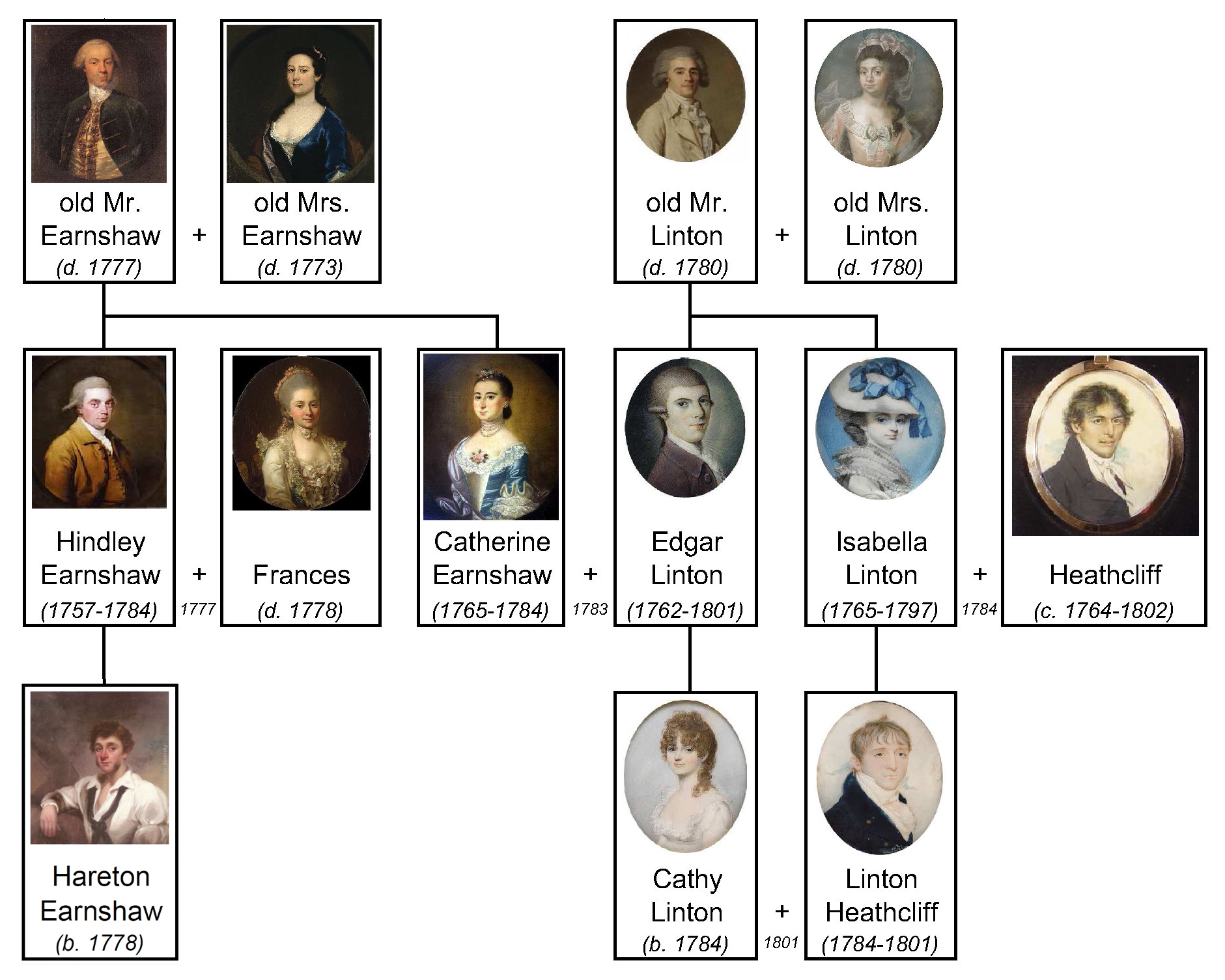
- And what's with the confusing names? Two Heathcliffs, Cathy and Catherine, Linton as a first and last name?Arrgh!


Yeah. I guess I'll finish, but I much prefer Charlotte's Jane Eyre.

Apr 11, 2016

Reading The Classics: The Iliad by Homer


The Iliad, Homer’s epic poem about the Trojan War, might feel like heavy reading, but it’s not. It’s actually the Ancient Greek equivalent of an action movie, and a pretty graphic one at that; there’s no shortage of spurting blood, breaking bones, and guts falling out. It explores all aspects of warfare; the glory, but also the cost.

I picked the Lombardo edition to read, because his approach of using colloquial language sounded fun, and it was. How could you not love stuff like Paris being referred to as “pretty boy” and “you sissy, curly-haired pimp of a bowman” and Zeus telling Hera to “sit down and shut up”?

I also liked the way the similes were in cursive so they stood out of the text. The introduction says that Homer used the similes as a way to make the events more relatable to a Greek living in peacetime by comparing them to something familiar, but I also found them calm interludes amidst all the killing.


The story begins when the Trojan War has raged for ten years, and it doesn’t end with the end of the war. Even the backstory of Paris stealing Helen from her husband, Menelaus, Agamemnon’s brother, and the unfortunate Judgment of Paris thing (he picked Aphrodite over Athena and Hera in a beauty contest, which explains why some gods are playing favorites) are hardly mentioned. And the Trojan horse thing? Doesn’t even make an appearance.

At the heart of the story is the feud between Achilles and Agamemnon. Agamemnon, after first refusing a rich ransom, is forced to give his war prize, Chryseis, the daughter of a priest of Apollo, back to her father when he sends a plague on the Greeks. As the commander of the army, he’s pissed and humiliated, and takes Achilles’ woman, Briseis, instead. The relationship between the two warriors is already strained, because Achilles is the better fighter. Achilles takes the loss of Briseis as great insult, and sulks in his tent for most of the book, even when reparations are offered.

Why is one man so important? He’s a hero, of course, and it’s implied that he could turn the tide of the battle, maybe end it. Then the Greeks could finally go home. I found Achilles’ attitude petty at first, but the introduction cleared this up. In Ancient Greece, the war prizes were also a measure of a hero’s worth, his honor, so taking away Achilles’ prize was an insult, resulting in loss of honor. Heroes were respected and accustomed to certain privileges. Every time they went into battle, they risked loss of life and limb, so that’s how the system worked: you went into battle, you got loot according to your station. But are station and riches the only reasons to fight? Of course not, as Achilles’ beloved friend Patroclus reminds him. In the end, when Achilles refuses to budge, Patroclus puts on his armor and joins the fight. His death at the hands of Hector, the Trojan hero, finally shakes Achilles out of his funk. The battle between Achilles and Hector feels like the climax of the story.

The Iliad ends when Priam successfully ransoms Hector’s body from Achilles. It felt a bit anticlimactic to me; almost five hundred pages, and the war doesn’t even end? Everything goes on as before? Achilles’ prophesied death doesn’t occur. WTF? Okay, so everything isn’t as before, not really. Homer implies that the loss of Hector means that the Trojans lose the war. It’s inevitable now. And the story does return to the beginning, in a way: compare the botched-up ransom attempt of Chryseis to Achilles accepting Priam’s ransom. Agamemnon doesn’t think a ransom is enough compensation for Chryseis, Achilles feels Agamamnon’s offered gifts aren’t worth his only life (which he risks in battle). In the end, Achilles accepts Priam’s ransom as the only compensation there is and gives him back the body of his son. It doesn’t bring back Patroclus, but it’s all there is. Somehow, Achilles and Priam feast together and can ever respect each other. It’s a beautiful moment.

The Iliad is a fascinating read, and I heartily recommend this translation. It makes the story come to life. You can almost hear the spears and swords clash, the groans and screams. Well worth reading.

Mar 21, 2016

Ulysses by James Joyce: Done!!!!


Finally, finally, finally finished Ulysses. Whew! Seriously, it's the most difficult book I've ever read. Did I enjoy it? Well, let's just say I can appreciate it and understand why it's a classic, but I didn't form an emotional attachment to the book. It's so hard to follow that I found it very difficult to care about any of the characters. Sure, there's a fair bit of humour in it, even of the low-brow variety (think graphic descriptions of bodily functions), but there's practically no plot, and while I enjoyed the literary Easter egg hunt part, I can see how others wouldn't. 

I used the Ulysses Annotated guide by Gifford and Seidman to get me through this behemoth, and I would have been completely lost without it. If you want to understand even a fraction of the allusions in the book, get a guide. (This one's fine, if you want the annotations, but it doesn't really explain the big picture. It also had too much info on the streets of Dublin and minor character names for my taste. It even tells you if the authors don't know to whom a particular name refers. Why? Isn't that clear from context?) I read the annotations first and then the episode in the book. I recommend trying to get through the whole episode in one go, because it gets even more confusing if you only read a page or two and try to continue it later. I also discovered Frank Delaney's podcast Re:Joyce when I had almost finished, but it helped me understand the way Joyce's mind works, and I felt I got more out of the novel than I would have otherwise. I think I'll keep listening to the podcast even though I've finished the book. 

Some things surprised me, like Molly Bloom's monologue. From what I had heard, that was supposed to be the toughest part of the book, but I actually found it much easier to follow than many of the other episodes. A lot of people praise it for being feminist. I'm not convinced. Molly thinks like a man would fantasise a woman thinking about sex, and otherwise thinks about empty-headed, frivolous things like her looks and clothes, and then puts down other women. After how she's portrayed in the rest of the book as unteachable and vain and promiscuous, I kind of hated this.Women do this about other things, you know. Okay, everybody else in the book is obsessed with sex, too, so . . . 

I started reading Ulysses last September, so it took me six months to finish. Was it worth it? 

Hmm... I'd say yes, as a learning experience. As something to read for pleasure, not so much. 

Ulysses is amazingly complex: every episode has its counterpart in Homer's Odyssey, though it's a loose, sometimes only thematic, connection, not an event-for-event, character-for-character one. The episodes also have a colour, symbol, organ, art, and technique associated with them. Some made sense to me, others didn't. Every sentence and paragraph is packed with allusions and literally references, and many words are doing double or triple duty in terms of meaning. That's an amazing amount of information, and Joyce trusts the reader to get it; he doesn't over-explain, just moves on. I like that.

But as amazing as all this is, it's also very confusing for the reader. Deliberate obscurity is something I'd like to avoid in my writing. I also think one should be able to read a novel without resorting to a guide to get through it. And I feel that the structure of the book should serve the story, not be the point of the novel. The shift from one literary style to another made the book even harder to read. I understand it's kind of the point of the book, but it hurt my immersion in the story. 

Another thing to study here is the stream-of-consciousness technique and Joyce's use of sentence fragments, both masterfully done and useful tools for any writer. 

There were also bits of stunning description, and every word felt thought through and carefully selected. That kind of attention to detail is worth striving for.

I did a whole post about the literary devices Joyce uses, so I won't repeat it here, but those were also a revelation. "Aeolus" was the toughest episode for me, and the one where I got the most out of my guide.

So, I did learn a lot. 

In conclusion, Ulysses is fascinating and infuriating in equal measure. It's not for everyone, but if you're a writer, definitely give it a shot. If nothing else, at least read Molly Bloom's monologue from the end of the book to see what all the fuss is about. Don't worry, it's quite short.

Now I'm left with a hankering to re-read the Odyssey. But I need to read the Iliad before that... In Molly Bloom's words: yes I said yes I will yes.


Mar 18, 2016

Reading Challenge!


As you might have noticed from the blog, I'm trying to catch up on the classics I've missed, both science fiction/fantasy and the literary kind. But how do you define a classic? Where should I start? I did some googling and decided to go with these two lists. I'll try to read everything on them, but I'm not setting myself any time limits; this is just me competing against myself. If you want to join me, here are the links to the lists:

Here's the list: classics of science fiction. The site also has lists for 100 fantasy classics and The Guardian's list of SF/F classics. There's a lot of overlap on these lists, but I decided to do the science fiction one, because I've read a lot more fantasy that science fiction over the years. I've read 36/193 on the list so far, and I've got about ten more waiting on my kindle. 

What about literary classics? Well, I decided to go for The Guardian's list of one hundred best novels of all time for those. I've read 26/100 over the years. This should prove interesting; there's a bunch of stuff I've never even heard of on the list. 

Feeling even more ambitious? Here's The Guardian's list of the 1000 novels everyone must read.

Ready, set, read!


Mar 14, 2016

Writer Crush: Minna Canth


Minna Canth (1844-1897) was a Finnish writer, journalist, and feminist. Born Ulrika Wilhelmina Johnsson, she was the daughter of a wealthy merchant, and attended a Swedish-language girls' school when growing up. From a young age, she rejected the stereotypical role thrust upon women at that time and wanted to become a schoolmistress, one of the few careers open to women in the 1800s. (It was pretty much that or a midwife. Or wife and mother, the traditional choice.)

While she was studying at the seminary school in Jyväskylä, she fell in love with her science teacher Johan Ferdinand Canth, dropped out, and got married. Okay, not a very feminist thing to do, but she did refuse his proposal twice before accepting, so it probably was a hard decision for her. She helped him edit his two journals, in which she published her first articles and short stories. But their happiness didn't last: in 1879 Johan died unexpectedly of "brain fever" (so probably encephalitis or meningitis) while Canth was pregnant with her seventh child. Alone with seven children and no income, a lot of women would have given up, but not Canth: she moved to Kuopio and took over her father's yarn store, which was near bankruptcy at the time. She turned the business around in a few years, and suddenly she had the means to support her family and the leisure to become a full-time writer.

Over the years Canth wrote a number of plays and stories, and also acted as editor of a journal called Vapaita Aatteita (Free Thought). She was a vocal proponent for women's rights and very active in the community. Her salon hosted many of the brightest minds of the time. Despite having modern sensibilities, Canth was also very religious, which led to some interesting conflicts.

I picked up a collection of Canth's work because I wanted to research 19th century speech patterns for a short story, but Canth surprised me. I fell in love with her sharp wit, memorable characters, and clear voice. Canth is a realist writer, and she was also influenced by the naturalist movement, so a lot of her stories have to do with the lives of the poor and women's rights. Her literary influences include Tolstoy, Dickens, Zola, and Strindberg. Unsurprisingly, Canth's protagonists are mainly women, and a lot of the male figures in the stories are weaklings or villains. The endings aren't happy, but they do pack a punch; in most of Canth's stories, the final paragraph makes the story.

This is probably something that gets lost in translation, but I also love the old-fashioned language Canth uses. The effect is probably similar to what modern readers experience reading Dickens or other 19th century English writers. There's quite a few lovely, forgotten words in the Finnish language, and I'm glad Canth reminded me of them.

Just to give you a taste, I decided to translate a few bits for you:

Here's a bit from an essay on women's rights:

"In addition to a sedentary life and flights of fancy come corsets, to which can be attributed at least half the internal maladies of which women nowadays suffer. This artificial concept of beauty is the worst enemy of nature. A woman must be slender, and because of this is her ribcage compressed, her internal organs squashed and pushed from their proper places until they press and harm the more fragile parts of the body. Just think how this impairs the body's normal functions. And constantly people speak of a woman's innate weakness as an impediment to giving her equal rights. Were we to raise a boy in as idiotic and closed-minded a fashion as a girl and stuff him in a corset, we'd see how far his stamina and health would take him."

Yep, this made me feel guilty about buying a corset.

And here's a description of Kauppa-Lopo, a disgusting but good-hearted and wily character prone to kleptomania and drinking:

"Lopo turned her turgid face to the room and went on grinning. Rita again marvelled at her hideousness. Snot with bits of snuff glistened under her nose and at the corners of her mouth, and matted hair hung in her eyes. And what about the cheeks? Dirty, grey, and distended, it looked like she was chewing two huge wads of tobacco, but it was only snuff.

Riitta thought her choice of clothing a bit peculiar, too. Lopo's skirt was as wide on top as at the hem and her coat, black and coarse as a potato sack, bulged out at the waist. The top button was missing, revealing a neck like cured leather."

A vivid bit of description, isn't it?

If you want to check out Canth's work, here's a link to a translation of The Parson's Family, and Amazon has this translation of The Burglary and The House of Roinila. Her most famous works are probably Anna Liisa, the story of a fifteen-year-old who got pregnant out of wedlock and killed her newborn child, and The Worker's Wife, about a woman stuck in a marriage to an alcoholic who wastes all her money. More of Canth's work needs to be translated. The world needs to know about Kauppa-Lopo!

In Finland, we celebrate Minna Canth on her birthday the 19th of March (this Saturday) by flying flags in her honour. The day also commemorates equal rights. Canth is the first Finnish woman to get her own flag day.

So that's Minna Canth for you. I bet she was one tough broad.

Source:

Kodin suuret klassikot: Minna Canth, toimittanut Ilpo Tiitinen


Nov 22, 2015

Northanger Abbey


I just finished reading Northanger Abbey, Jane Austen's first novel to be completed for publication. Austen sold it to a London bookseller Crosby & Co. in 1803, but they decided against publication, so she bought it back for the same sum of ten pounds, and it was finally published after her death in 1817. 

Northanger Abbey has all the trademarks of an Austen novel: the intricacies of etiquette in high society, deliberation on marrying for money and marrying for love, the social commentary, and Austen's wry sense of humour. Austen uses the book to poke fun at the gothic novel, which is hilarious at times, but somehow that part feels extraneous to me. Maybe it's just that I've read Austen's other works, which feel more polished and complete. Okay, the obsession with gothic novels is part of the main character, but is it necessary to the story? If Austen had gone another way, would it have hurt the book?

There is also an unexpected author intrusion where Austen gives the reader a piece of her mind on the value of novels. Apparently there was a great deal of prejudice against them at the time.  

As the main character, Catherine, is obsessed with gothic novels, and the book plays on that fantasy versus reality aspect, I wonder if the author intrusions where Austen reminds us that we're reading a novel and breaks the reader's immersion in the story are a conscious choice. Here's a link to the Jane Austen Society's analysis of the book for further reading. The page also has an excerpt of Austen's defence of the novel. 

What did  I take away from this as a writer? Parody's hard to get right. This is one of Austen's earlier works, originally meant to be read only to her family. Maybe she was still finding her groove? The prose is lovely, and the voice is there, but somehow this rings hollow to me. I didn't get that invested in the characters or the story; not like I did with Pride and Prejudice or Emma

In the end, I feel like this is two books smooshed together: a Jane Austen novel and a parody of the gothic novel.     

An enjoyable read, but it doesn't make my list of all-time favourites.

Sources:
Northanger Abbey by Jane Austen

Aug 17, 2015

Sei Shonagon: The Pillow Book


For those who aren't familiar with The Pillow Book, it's a collection of observations, stories, and lists by Sei Shonagon, a court lady in Heian Japan. I knew going into this that the book didn't have a structure to it, so it didn't bother me, but I can see that this might be a frustrating read if you don't take this into account. I was actually surprised how much I enjoyed reading Sei's stories of court happenings and her sometimes acerbic remarks about those around her, the Empress Consort Teishi, and religious festivals. 

 The tone is mostly light and playful. Even when Empress Teishi fell out of favour with the Emperor and had to leave the court, Sei doesn't mention this. I think it's important to know the historical context, though, and at least for a westerner not familiar with the major poetical works of the day, an annotated version is very helpful. I have the Penguin Classics edition, which was very good about explaining the references and unfamiliar customs. In addition to the annotations, it had a  section in the back with maps, pictures of court clothing, and general info on Heian Japan.

 A Finnish writer Mia Kankimäki wrote a book about her life-changing journey to Japan to find Sei and herself. It's called Asioita, jotka saavat sydämen lyömään nopeammin (Things That Make the Heart Beat Faster), after one of Sei's lists. Kankimäki felt a special kinship with Sei, and suggested that The Pillow Book resembles modern blogs, which is a fascinating idea. Reading The Pillow Book does feel intimate, like Sei is really speaking to you from hundreds of years ago. I think that's part of its charm. Kankimäki's book makes a nice companion piece to The Pillow Book (if you can read Finnish, that is).  

For me, the experience was a bit different. The Pillow Book reminded me of a diary, but more specifically the kind of notebook or journal most writers carry around to write down ideas and snatches of description in. There are incomplete scenes and unfinished stories, like it's a work in progress. The mysterious lists are apparently meant for use in writing poems, which was a very important part of court life and communication. If you read them as they are, they're enchanting, but this knowledge gives them a special significance for writers. 


Here's my current journal. Pretty, huh? It's almost full by now.

I loved this book and will probably return to it many times. Highly recommended, especially for writers.

I'll leave you with Sei's list, the one I mentioned above:

Things that make the heart beat fast

A sparrow with nestlings. Going past a place where tiny children are playing. Lighting some fine incense and then lying down alone to sleep. Looking into a Chinese mirror that's a little clouded. A fine gentleman pulls up in his carriage and sends in some request.
To wash your hair, apply your makeup and put on clothes that are well scented with incense. Even if you're somewhere where no one special will see you, you still feel a heady sense of pleasure inside.
On a night when you're waiting for someone to come, there's a sudden gust of rain and something rattles in the wind, making your heart suddenly beat faster.